


Reimagining Space and Income: Why ADUs Are the Future of Rental Living in Texas
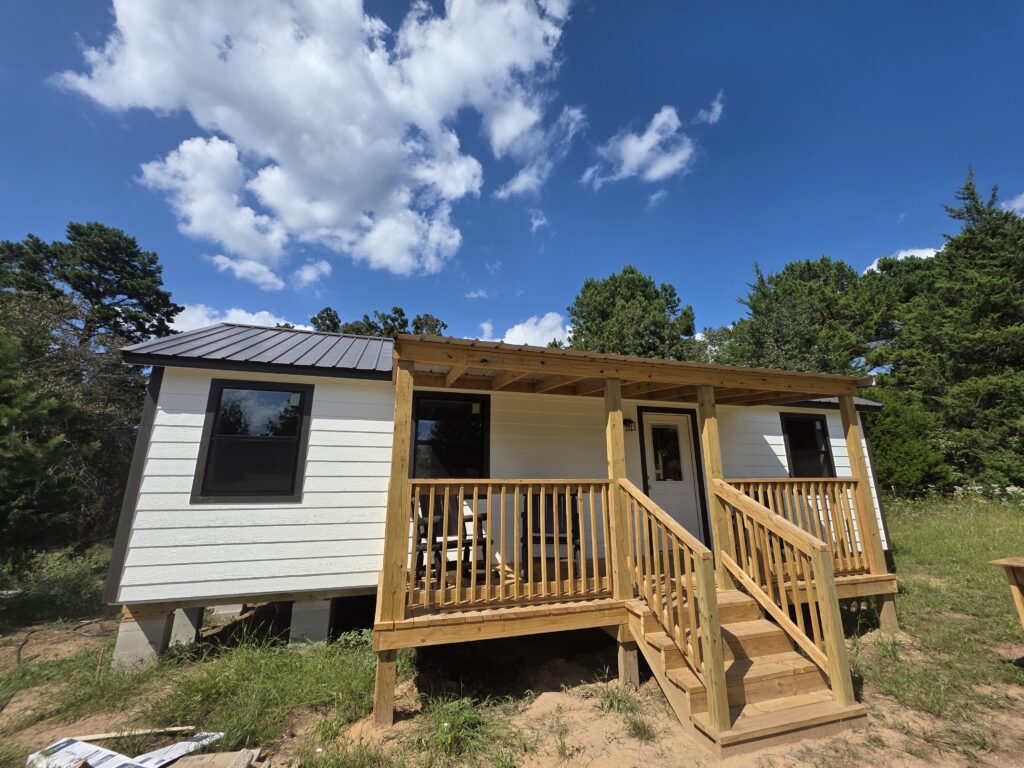
A quiet transformation is happening across neighborhoods in Texas. Homeowners are discovering that with the right design and partner, their own backyard can become a meaningful source of income, independence, and purpose.
At Tiny Homes of Hope, we’ve seen this evolution firsthand. The rise of Accessory Dwelling Units (ADUs) isn’t just a housing trend — it’s a movement redefining what financial flexibility and sustainable living look like for modern Texans.
1. The ADU Revolution: Beyond the Buzz
Across the U.S., cities are rewriting housing policy to allow for smarter land use. In Texas, ADUs — small, fully functional homes built on the same lot as a primary residence — are fast becoming an intelligent solution for both personal and rental use.
These units blend privacy with practicality: a guest suite, a long-term rental, or even a place for aging parents. The beauty lies in the adaptability. What once was unused space can now serve a life purpose while increasing property value.
For homeowners who want more control over their investments and their environment, the ADU represents a form of quiet empowerment.
2. Why Texas Is Poised for the ADU Boom
Texas stands at a unique intersection of opportunity: abundant land, flexible zoning in many communities, and a growing demand for affordable yet high-quality rental options.
In urban centers like Austin and Dallas, young professionals seek independence without inflated housing costs. In suburban and rural towns, families are creating additional units to host relatives or generate rental income that supports long-term stability.
This balance of financial practicality and community-minded design is why ADU rental homes are gaining traction faster here than almost anywhere else in the country.
Tiny Homes of Hope recognizes this momentum not just as a business opportunity but as a social one — a way to expand access to dignified, efficient living spaces while helping homeowners secure sustainable income.
3. The Dual Power of Purpose and Profit
What makes ADU rental homes compelling isn’t only the income stream. It’s how they align with a deeper cultural shift: the return to meaningful, intentional living.
Instead of building large homes that sit half empty, many Texans are investing in smaller, smarter spaces that serve a purpose — rental units, creative studios, or quiet retreats. For many, this is more than a financial choice; it’s an ethical and emotional one.
At Tiny Homes of Hope, we design every ADU with both heart and ROI in mind. We focus on functionality that meets real needs — from energy efficiency to privacy layouts — ensuring that homeowners feel proud of what they’re adding to their property.
4. Building Smarter, Smaller, and More Sustainable
Building an ADU is not about compromise. It’s about optimization — of space, cost, and resources.
A thoughtfully planned ADU can be constructed faster and at a fraction of the price of a conventional home, yet deliver long-term durability and value. With innovations in modular construction and sustainable materials, these small homes embody the principle of doing more with less.
Tiny Homes of Hope brings together design expertise, practical construction methods, and local insight to create rental-ready ADUs that reflect Texas living — durable, beautiful, and deeply functional.
From the foundation to the finishing details, every build reflects our commitment to craftsmanship and client partnership.
5. What Sets Tiny Homes of Hope Apart
Many companies can build structures. We build homes that hold meaning.
Our approach centers on collaboration and clarity — from the first consultation to the final inspection. Homeowners work directly with our team to ensure that their ADU not only fits the property but also aligns with their long-term vision.
We take pride in offering transparency throughout the process: no jargon, no shortcuts, no surprises. Whether the goal is to host family, create a private workspace, or launch a rental venture, we treat every ADU as a story of personal transformation and smart investment.
This mindset has positioned Tiny Homes of Hope as one of the most trusted names for homeowners seeking to turn unused land into opportunity.
6. The Future of Flexible Living
The story of ADUs in Texas is only beginning. As cities evolve and families seek new ways to balance income, independence, and sustainability, these small homes will define the next chapter of residential design.
At Tiny Homes of Hope, we see ADUs not as an architectural experiment, but as a bridge — connecting practicality with purpose, and personal dreams with tangible outcomes.
For homeowners ready to think beyond the traditional, the backyard is no longer an afterthought. It’s a frontier of hope, innovation, and income.
FAQs
1. What is an ADU, and how does it differ from a tiny home?
An ADU (Accessory Dwelling Unit) is a secondary housing unit built on a single-family property. It’s typically larger than a standard tiny home and designed to meet local building codes for rental or long-term use.
2. Why are ADUs a smart choice for rental income in Texas?
They offer an affordable entry point into property investment while increasing your home’s overall value. With growing housing demand, ADUs provide stable and consistent rental returns.
3. How does Tiny Homes of Hope help homeowners through the process?
We guide clients from concept to completion — including design, site planning, and construction — to ensure their ADU aligns with local regulations and long-term goals.
4. What are the zoning considerations for ADUs in Texas?
Zoning varies by city, but many areas are increasingly supportive of ADU projects. Tiny Homes of Hope assists clients in understanding and navigating these requirements efficiently.
5. How long does it take to build an ADU?
Timelines depend on size and complexity, but most of the ADUs we build can be completed in 6 to 8 weeks. Our focus on efficiency and quality ensures the process stays smooth.
6. Are ADUs sustainable?
Absolutely. ADUs often use fewer materials, consume less energy, and promote responsible land use. Tiny Homes of Hope integrates eco-conscious materials and design principles in every project.